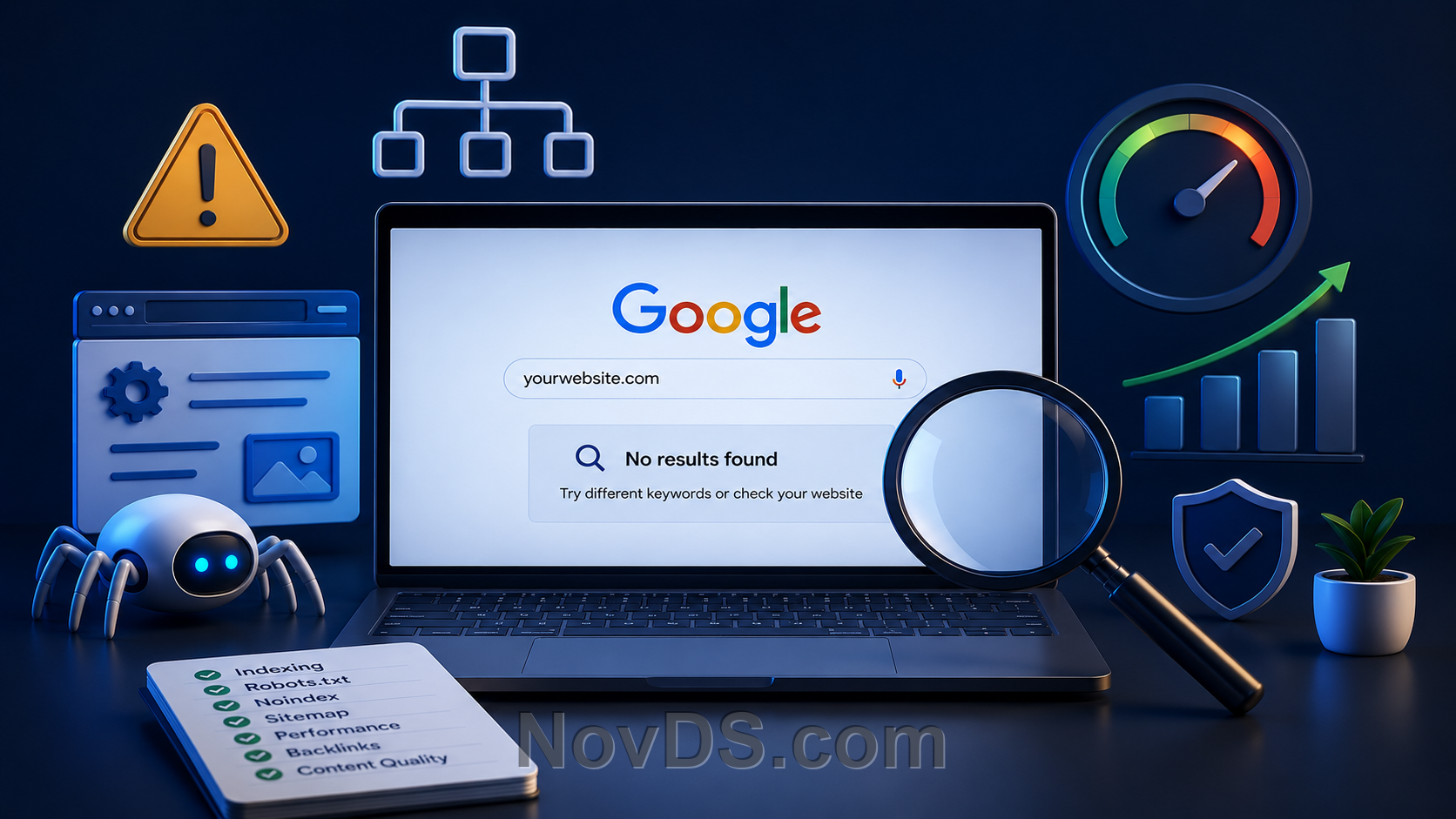
Many website owners and digital project managers face a frustrating situation: they search for their website's name or business activity on Google, but find no trace of it among the search results. This problem is not rare; in fact, it's one of the most common technical inquiries among developers and business owners alike. A website's absence from search results doesn't necessarily mean a major flaw, but it's often the result of several accumulated technical and administrative factors that can be diagnosed and addressed with clear, specific steps.
The Difference Between Not Appearing and Not Ranking Well
Before delving into the reasons, it's important to differentiate between two completely different situations. The first situation is that the website is not fully indexed by Google, meaning the search engine doesn't even know the website exists. The second situation is that the website is actually indexed, but it appears on later pages of search results due to weak competitive ranking. The treatment differs radically between the two cases, so accurate diagnosis is the first step before any corrective action.
Key Reasons Preventing Your Website from Appearing in Search Results
1. The Website Is Not Indexed by Google at All
Indexing is the process by which Google's robots visit website pages and store them in its massive database, preparing them for display in search results. If this process doesn't happen, the website won't appear, no matter how good its content is. This problem often occurs with new websites that haven't been reported to Google, or websites suffering from programming errors that prevent them from being fully crawled.
2. Crawling Blocked via Robots.txt File
The robots.txt file is used to instruct search engines about which pages are allowed to be crawled and which are forbidden. A common mistake, especially after moving a website from a development environment to production, is forgetting to remove the command that prevents all robots from crawling the entire site. This simple error alone is enough to completely hide the website from Google, despite the correctness of other settings.
3. Presence of a Noindex Tag on Website Pages
The Noindex tag is a programmatic instruction placed within a page's code to tell Google not to index it, typically used for test pages or temporary pages. The problem arises when this tag remains mistakenly active on main pages after the website is officially launched, preventing Google from listing them despite being accessible and crawlable.
4. The Website Is Newly Created and Not Enough Time Has Passed
Google usually needs a period ranging from several days to several weeks to discover and fully index a new website, especially if there are no external signals indicating its existence, such as links from other sites. This period is completely normal and no cause for concern, but it does require monitoring to ensure there are no additional technical obstacles unnecessarily prolonging this wait.
5. Failure to Submit a Sitemap to Google
A sitemap is an organized file containing a list of all important pages on a website, helping Google discover and index them more efficiently. The absence of this file or its failure to be submitted via Google's dedicated webmaster tools makes the discovery process slower and less comprehensive, especially for large websites with a high number of pages.
6. Technical Issues Affecting User Experience and Performance
Google pays increasing attention to user experience metrics such as page loading speed, mobile compatibility, and element stability during loading. Websites that suffer from extreme slowness or a non-responsive mobile design may not be completely excluded from indexing, but they face significant difficulty appearing in the top results, and sometimes their crawling process is delayed due to excessive server resource consumption.
7. Weak or Copied Content from Other Websites
The search engine tends to favor original content that provides real value to the visitor. Websites containing copied text or thin content that doesn't adequately cover the topic are often ignored or pushed to very late ranks despite being actually indexed. Content quality and depth are crucial factors that differentiate a website that appears strongly from one that remains out of sight.
8. Lack of Backlinks and Weak Digital Authority of the Website
Backlinks from other websites act as trust signals for Google, helping it assess the importance of a website compared to competing sites in the same field. New websites that lack any external links find it harder to compete for keywords, even if they are correctly indexed, because digital authority is built gradually over time, not immediately upon website launch.
9. Website Subjected to a Manual or Algorithmic Penalty
In certain cases, a website may be subject to an explicit penalty from Google due to violating quality guidelines, such as using illicit link-building techniques or attempts to manipulate rankings. This situation is less common but requires careful examination via Google's dedicated tools to ensure there is no official notification of a violation that needs to be addressed before the website's visibility can be restored.
How to Check Your Website's Status on Google?
Before implementing any solution, it's essential to accurately diagnose the current situation through two simple and effective steps:
- Direct search using the command site: followed by your website's URL in the Google search box, which shows the number of actually indexed pages, if any.
- Reviewing the Coverage report within Google Search Console, which details indexed and excluded pages and the reason for each exclusion.
Practical Steps for Solution and Improvement
After identifying the exact cause, a set of integrated actions can be followed to address the problem at its roots:
- Ensure that the robots.txt file is free of any commands that prevent crawling of important pages on the website.
- Review the code of the main pages to ensure that no Noindex tag is mistakenly active.
- Create a Sitemap and submit it directly via Google tools to speed up the discovery process.
- Improve website loading speed and ensure full compatibility with mobile devices.
- Review the quality of published content and ensure its originality and comprehensive coverage of targeted topics.
- Gradually work on building natural backlinks from reliable sources relevant to the website's field.
- Ensure there are no manual action notifications within the Search Console account.
- Monitor performance reports regularly to detect any sudden decline in indexing or visits and address it early before it escalates.
How Long Does It Take to See Results After Fixing the Problem?
There is no fixed timeline that applies to all cases; the duration depends on the nature of the original problem, the size of the website, and Google's crawling activity. Usually, the first positive indicators, such as pages starting to appear in the coverage report, emerge within a few days of fixing fundamental indexing issues like the robots.txt file or the Noindex tag. However, actual improvement in competitive ranking typically takes weeks or months, especially if the solution involves building backlinks or cumulatively improving content quality. Patience and regular monitoring via Search Console are essential elements at this stage.
Frequently Asked Questions About Website Visibility on Google
Is creating a website enough for it to automatically appear on Google?
No, creating a website alone does not guarantee its appearance. You must ensure it is crawlable, submit a sitemap, and wait for the indexing process to complete, which are steps entirely separate from the website building process itself.
Can website appearance be artificially accelerated?
There is no guaranteed way to bypass the natural indexing process, but it can be accelerated by submitting the website and its sitemap directly through official Google tools, and ensuring the website is free of the technical obstacles mentioned earlier.
Do ready-made applications and platforms affect visibility on Google?
The underlying technical basis of the platform has less impact than the settings applied to it. Any platform, whether built with a custom programming language or a ready-made content management system, can face the same problems if indexing and SEO settings are not configured correctly.
Conclusion
A website's absence from Google search results is a solvable problem in the vast majority of cases, provided it is accurately diagnosed and the root cause is addressed instead of settling for superficial solutions. It sometimes requires a comprehensive technical review that combines indexing, performance, content quality, and link building—interconnected elements that are difficult to separate in any successful SEO strategy. When dealing with a complex technical issue or persistent website absence despite applying basic solutions, enlisting a specialized search engine optimization team becomes a practical step that saves time and ensures accurate and professional treatment of the real causes, instead of experimenting with random solutions that may consume effort without clear results in the short or long term.